
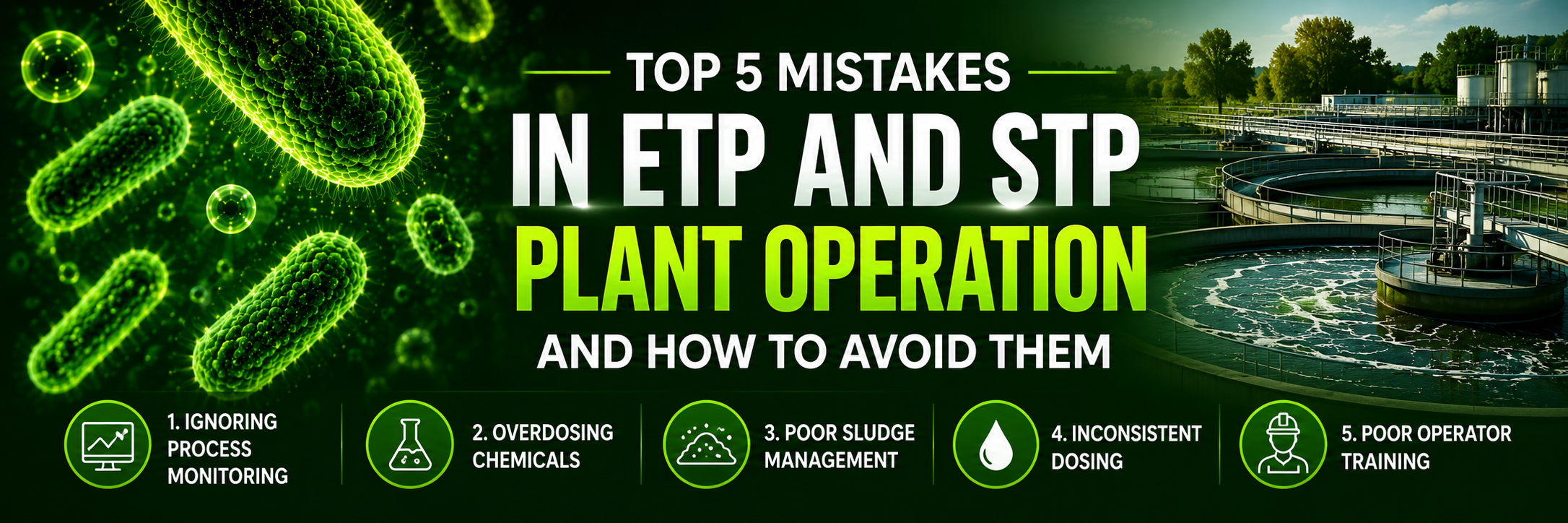
1. Ignoring Process Monitoring
Many plants rely on visual checks alone and miss important changes in COD, pH, DO and sludge quality. A simple monitoring routine can prevent major performance issues.
2. Overdosing Chemicals
Too many corrective chemicals can destabilize biological treatment and raise operating cost. Better process control improves both economics and compliance.
3. Poor Sludge Management
Weak sludge return and poor settling directly affect MLSS and final treatment quality. These issues often become visible as rising turbidity and reduced clarity.
4. Inconsistent Dosing
Inconsistent dosing of bioculture or coagulants can reduce treatment reliability. A standard routine with operator accountability improves results.
5. Poor Operator Training
Even an advanced plant can underperform when operators do not understand the reason behind each control action. Training is essential for stable operation.
## Operating checklist
How to use these checks
Use plant data to make decisions, rather than responding only after outlet quality changes. Record the following in the daily logbook.
| Parameter | Why it matters | Good practice |
| pH and temperature | Determines microbial activity | Track every shift and investigate abrupt variation |
| DO and MLSS | Indicates biological capacity | Review with loading and return-sludge data |
| COD/BOD trend | Shows treatment direction | Compare influent, reactor and outlet samples |
Conclusion
Reliable wastewater treatment comes from healthy biology, disciplined monitoring and a process plan matched to the actual effluent. A technical assessment can turn plant data into an achievable improvement programme.