
What is Bioculture?
Bioculture solutions are engineered microbial formulations that accelerate biological treatment in wastewater systems. They improve the activity of beneficial bacteria, helping plants reduce organic load more efficiently and maintain stable operations.
Why it matters
Industrial plants face fluctuating load, high COD and inconsistent sludge health. A strong bioculture strategy can improve reactor performance, shorten startup time and support better compliance outcomes.
Key Benefits
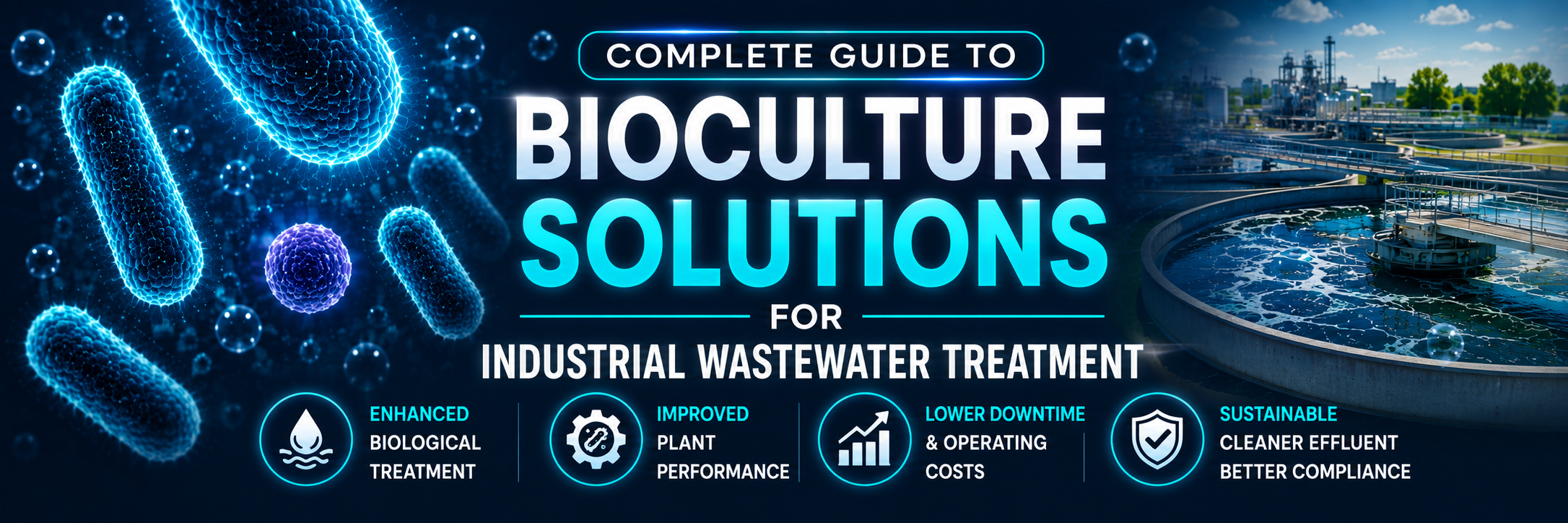
- Improves COD and BOD removal
- Enhances MLSS stability and sludge health
- Supports faster plant start-up
- Reduces chemical dependency in many systems
- Helps operators meet discharge targets with greater consistency
Where It Is Applied
Bioculture is widely used in ETP, STP, CETP and composting systems. It can also support equalization tanks, aeration basins and polishing units where microbial resilience is critical.
Practical Considerations
Operators should consider influent quality, pH, temperature and hydraulic loading before introducing any microbial product. A detailed wastewater assessment helps select the right formulation for each plant.
## Operating checklist
How to use these checks
Use plant data to make decisions, rather than responding only after outlet quality changes. Record the following in the daily logbook.
| Parameter | Why it matters | Good practice |
| pH and temperature | Determines microbial activity | Track every shift and investigate abrupt variation |
| DO and MLSS | Indicates biological capacity | Review with loading and return-sludge data |
| COD/BOD trend | Shows treatment direction | Compare influent, reactor and outlet samples |
Conclusion
Reliable wastewater treatment comes from healthy biology, disciplined monitoring and a process plan matched to the actual effluent. A technical assessment can turn plant data into an achievable improvement programme.