
Aerobic bacteria culture
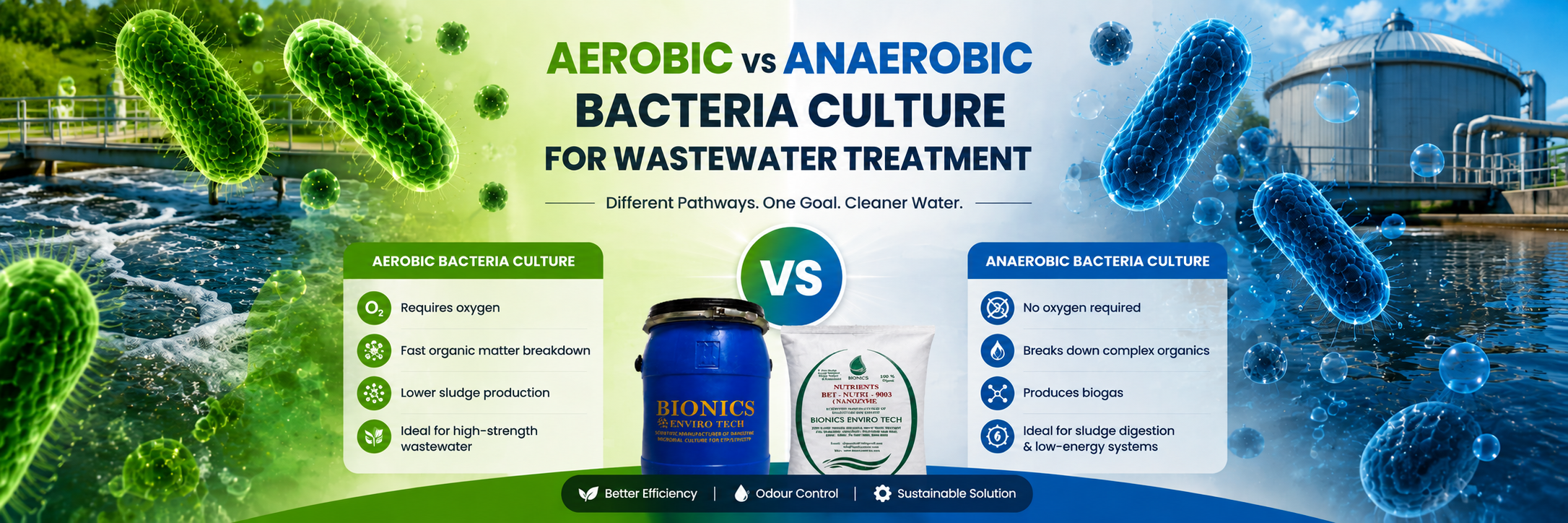
Aerobic microorganisms use oxygen while converting compatible biodegradable organic matter. They are commonly supported in aeration tanks, activated-sludge plants, MBBR systems and aerobic polishing stages.
Anaerobic bacteria culture
Anaerobic communities operate without supplied oxygen. Through hydrolysis, acidogenesis, acetogenesis and methanogenesis, suitable high-strength organic streams can be converted into stabilised products and biogas.
Choosing the correct pathway
Aerobic treatment is often used for lower-strength loads and final polishing, while anaerobic digestion can suit concentrated biodegradable wastewater. The best process depends on wastewater strength, biodegradability, temperature, alkalinity, sulphate, toxicity and treatment objectives.
They can work in sequence
Some plants use anaerobic treatment for bulk organic-load conversion followed by aerobic polishing. Culture selection must follow the actual reactor environment; aerobic culture should not be treated as interchangeable with an anaerobic consortium.